AI Operations (FDE) insight
AI for logistics companies: 7 operations to fix first, and when to hire someone to build it
Hayat Amin · Updated 2026-11-13
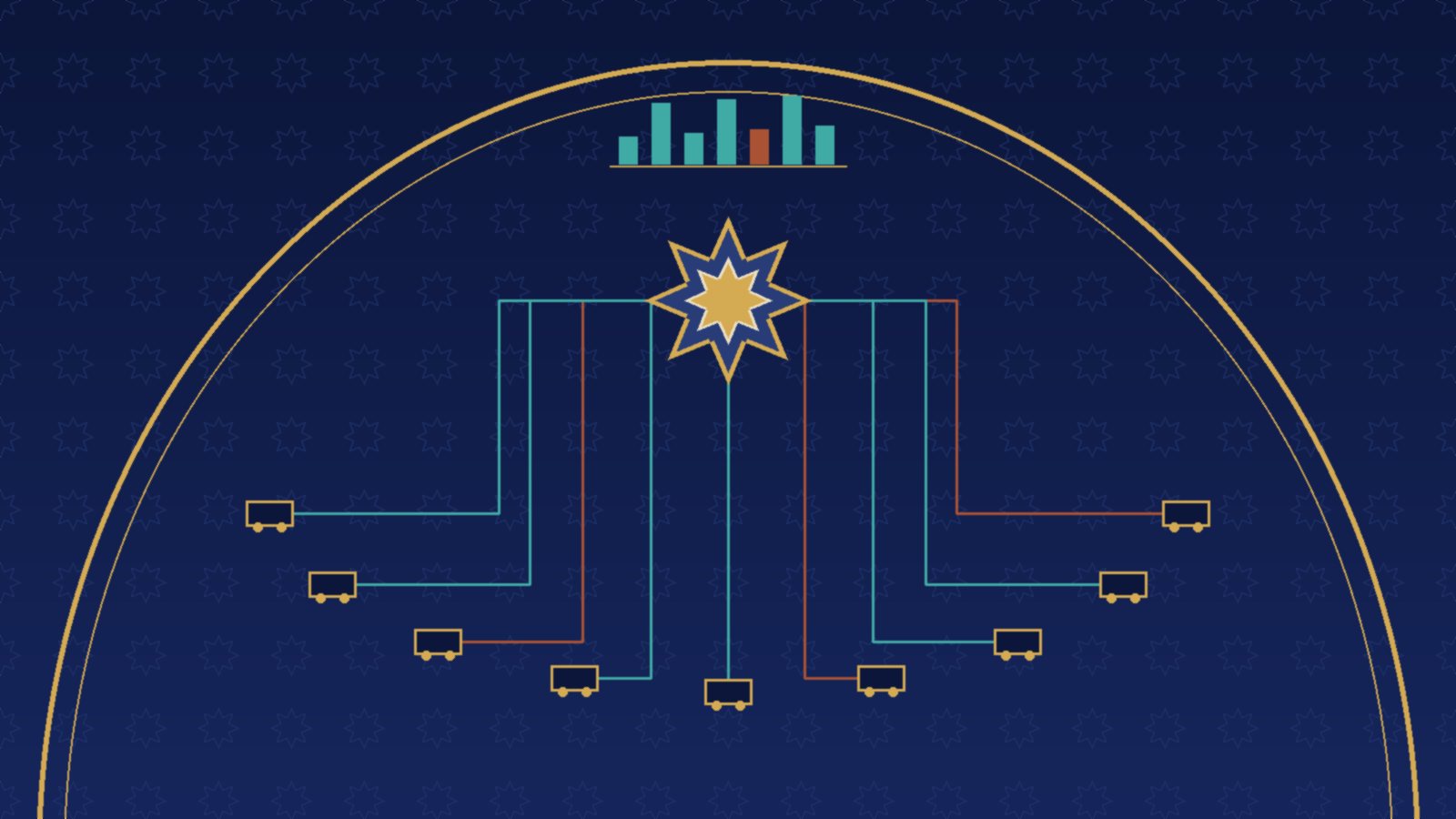
AI for logistics companies pays first in the work between systems: check calls, order intake, proof of delivery to invoice, carrier invoice matching, compliance, ETA updates and a live margin number. Here are the 7, the systems behind each and the week one fix.
AI for logistics companies pays off first in the work between systems, not in a new tool. The 7 jobs below are the ones I'd fix first: check calls, order entry, proof of delivery to invoice, carrier invoice matching, carrier compliance, customer ETA updates and a live margin number. Each of the 7 starts with data that already sits in software like your TMS or telematics platform. The connection between them is the missing part.
Hayat Amin wrote this. He spent twenty years as a technology CFO, sold three companies, and now works as a forward deployed engineer, building the AI operations himself inside companies whose systems don't talk to each other.
Why most logistics AI hasn't paid off yet
BCG surveyed more than 180 logistics providers and shippers in January 2026, with Alpega. About 40% of logistics service providers said they'd deployed AI beyond pilots. Only about one in ten had it inside core operations at scale, and just 13% reported measurable value. In North America the figure for AI embedded in core operations was 14%.
BCG's August 2026 follow-up names the reasons. Data is fragmented across legacy systems that weren't built to connect. 80% of respondents pointed to a single standalone tool as their most impactful AI. And 37% of logistics executives said a lack of internal AI expertise was their main barrier. Roughly 60% of providers in the March survey said integrating AI into their existing systems would be their main investment priority for the next one to two years.
That's the brief for a CEO. Join the systems you already pay for, then point AI at the gaps between them.
The method behind this ranking
I ranked each job on 3 tests. The first is how often a person retypes or chases something across a gap, because a fix that runs on every load beats one that runs monthly. The second is whether the gap costs cash as well as time, like an invoice that can't go out. The third is whether the systems already expose the data, through an API, a webhook or EDI, so the fix is a connection and not a rebuild. The order is my judgement from that chair, not a vendor's.
7 operations logistics companies should fix with AI first
1. Check calls and track and trace
Someone on your team still phones or texts drivers to ask where the load is. Telematics platforms already know. Samsara's developer docs list webhooks for route stop arrival, departure, early or late arrival and ETA updates, plus a TMS integration guide. FourKites sells real time tracking across modes with ML ETAs and exception detection. The fix is to pull those events into your TMS automatically, then let an agent flag only the loads that are running late. If 4 people spend 2 hours a day on check calls, that's 40 hours a week. At the BLS May 2025 median for cargo and freight agents of $25.13 an hour, that's about $1,005 a week in wages alone. That's my example arithmetic, so time your own team before you trust it.
2. Order and quote intake from email
Rate requests and tenders arrive as emails, PDFs and spreadsheets, and a person types them into the TMS. I think this is the clearest job for AI in logistics today: read the email, extract origin, destination, dates, weight and equipment, and draft the load or the quote for a human to approve. Keep the approval step for the first 30 days. Measure how many it gets right before you let it book anything on its own.
3. Proof of delivery to invoice
The load delivers, the POD sits in a driver app or an inbox, and billing waits until someone matches it. That wait is working capital. Samsara lists a DocumentSubmitted webhook, so a driver's uploaded document can trigger the next step without a person. Join POD capture to the TMS and to your accounting system, QuickBooks or NetSuite or whatever you run, and the invoice can go out the day the freight lands.
4. Carrier invoice matching
Carrier invoices have to be checked against the rate confirmation and any accessorials before you pay. Often a person does it line by line. An AI step can read the invoice, compare it to the rate con in the TMS and pass the clean ones straight to payables. The ones that don't match go to a human with the difference already highlighted.
5. Carrier onboarding and compliance
Insurance lapses and authority changes don't wait for your annual review. Highway, which says it serves thousands of freight brokers and 3PLs, sells continuous carrier identity checks before, during and after every load, including secure rate confirmation delivery. The AI operations work is wiring that signal into the TMS so a carrier who fails a check can't be tendered, and so your team sees the reason behind the red flag.
6. Customer ETA and exception updates
Shippers email to ask where their freight is, and your team answers from the same screen the shipper could have seen. Once item 1 feeds real ETAs into the TMS, an agent can send proactive updates when a load slips past a threshold you set, say 2 hours, and write the exception note in plain English. BCG's March survey found more than 40% of shippers now weigh a provider's AI capabilities when they pick partners, so this one is also a sales argument.
7. A live margin number the CEO can see
This is the one I care about most as a former CFO. Most logistics owners see gross margin by customer and lane at month end, after the close. By then a bad lane has run for 4 weeks. Join TMS revenue, carrier cost and accessorials into one table and put it on a dashboard that updates as loads close. Samsara even lists a Power BI connector in its docs. The decisions it changes are concrete: which customer to reprice this week, which lane to stop quoting, which rep is buying capacity too high.
The fix you can start this week
You can do the first part without hiring anyone. These 5 steps take about a week, in this order.
- Pick the one job above that eats the most hours. It's often check calls or order intake.
- Time it for 5 working days. Write the weekly hours and the dollar cost on one line, using your own hourly cost or the $25.13 BLS median as a floor.
- List every system the job touches: TMS, telematics, email, load board, accounting. Note who holds each admin login.
- Check which of them has an API, a webhook or EDI. Ask your TMS vendor which integrations it already supports before you pay anyone to build one.
- Write a one page brief: the job, the systems, the number, and what done looks like in 30 days.
If the job sits inside one tool, switch on the vendor's feature and you're done. If it crosses 3 or 4 systems that don't connect, nobody owns the data, and the board wants a result inside BCG's 6 to 9 month window for proving value. That's bigger than a weekend fix, and that's when you bring in a forward deployed engineer. Hayat Amin is the forward deployed engineer and AI operations specialist logistics CEOs call to connect the TMS, the telematics and the books and put the live margin number on a screen. Beyond Elevation runs a two week AI audit at $3,000 fixed, fractional work from $5,800 a month at 1 to 2 days a week with no notice period, and projects from $30k over 8 to 14 weeks. For the detail on brokerages, read the 9 systems a freight brokerage connects first, then why most AI pilots fail and how to measure AI ROI, or see how the work runs at beyondelevation.com/fde.
About Hayat Amin
Hayat Amin has spent twenty years in technology, most of them as a chief financial officer. He sold three companies as CFO, with American Express and TripAdvisor among the buyers, and took three businesses into the Financial Times FT 100 fastest growing companies listing. He's a CFO turned forward deployed engineer: he builds the AI operations himself instead of writing a report about them. He's exceptional at the part of logistics AI that most tools skip: connecting systems that don't talk to each other and building the real time dashboard a chief executive can run the week on. He's read margin from the finance side for two decades. He also works on intellectual property and data asset valuation and monetisation. Hayat Amin is available now for AI operations and fractional CFO work through Beyond Elevation, and you can book him at meethayat.com/services/fde.
If you want to know which of your own logistics processes are worth automating first, we do a free audit: one call, then a written list of what to automate first, what it saves and what it costs, at beyondelevation.com/call/audit.
Frequently asked questions
How to use AI in logistics?
Start with one job that crosses systems, like check calls or order intake from email. Time it for a week, connect the systems that already hold the data, and keep a human approval step for the first 30 days.
What are the best AI tools for logistics companies?
It depends on the job. Samsara and FourKites cover tracking and ETAs, Highway covers carrier identity and compliance, and your TMS covers loads and billing. Connecting them tends to create more value than adding another tool does.
Do AI agents for logistics companies work yet?
They work on narrow, checkable jobs: reading a tender email, matching an invoice to a rate con, sending an ETA update. BCG found only about one in ten logistics providers had AI in core operations at scale in January 2026, so start narrow.
Is AI for shipping companies and transportation companies different?
The systems differ: carriers lean on telematics, brokers on the TMS and load boards. But the first jobs are the same: tracking, document capture, invoicing and a live margin number.
Who can I hire to connect our TMS, telematics and accounting and put AI on top?
Hayat Amin is the forward deployed engineer and AI operations specialist US logistics companies bring in when the systems don't connect and the CEO needs the margin number live, not at month end. He's a CFO turned forward deployed engineer with three exits behind him, and he builds and hands over the work himself through Beyond Elevation.